
One test for the whole marker pattern
A quantitative multiplex panel on a published bead platform – with calibration built into every test.
Today the pattern is rarely complete
Sepsis cannot be confirmed or ruled out with a single biomarker. Each marker answers a different question, and they rise at different times. In practice, however, markers are ordered one after another, IL‑6 and PCT are often skipped for cost reasons, and presepsin is rarely available.
On top of that, every analyzer converts its signals with its own calibration. The same sample can give different values on different devices – which makes comparisons and multi-marker tests difficult.
All four markers, calibrated in every test
HoloPlexID measures CRP, PCT, IL‑6 and presepsin together in one well. Each marker binds to its own type of coded magnetic hydrogel bead. Calibration is part of every single test, so values appear in familiar units and agree between instruments and sites.
The kit is designed to run on fluorescence imaging readers that laboratories already own. Later, the same panel will run in cartridges on a compact automated system close to the patient.
Our bead platform under the microscope
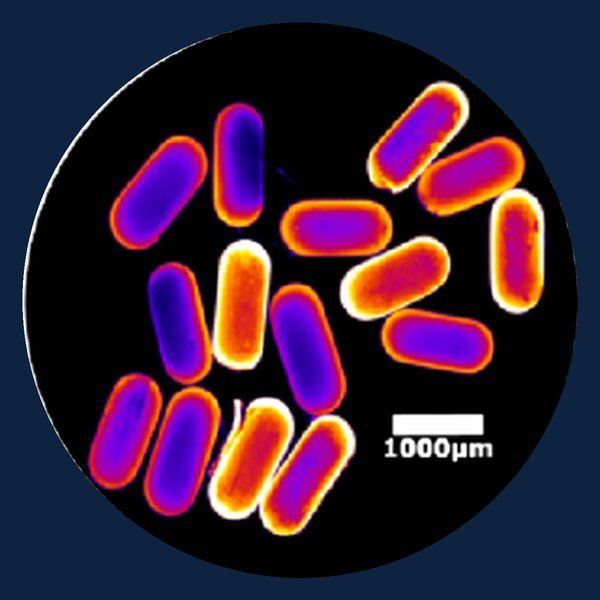
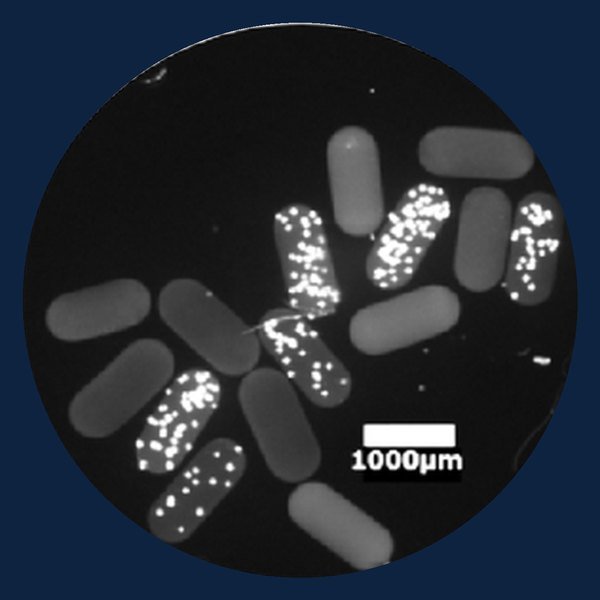

Microscope images: published antibody assay on the same bead platform – Alpsoy L et al., ACS Appl. Mater. Interfaces 2023 (CC BY-NC-ND 4.0).
Each marker answers a different question
One value alone can mislead
At time A, IL‑6 and presepsin are already high while CRP is still low.
At time B, IL‑6 has fallen again while PCT and CRP are high.
A single marker can miss either phase. Measured together, the four markers show where the patient stands.
IL‑6
Rises within hours and shows the early inflammatory response.
PCT
Points to a bacterial infection and supports antibiotic decisions.
CRP
Rises later and reflects the course of the inflammation.
Presepsin
Rises early when immune cells take up bacteria.
From research to product
The bead platform is published, and first experiments show that calibration inside the test works. Next, we validate the four-marker panel on patient samples together with our clinical partner in Freiburg.
Sample volume, whole blood and time to result are development targets. HoloPlexID is in development and not available for diagnostic use.
From four markers to the full picture of the patient
Sepsis affects inflammation, the immune system and the organs at the same time. In talks with clinicians, one goal comes up again and again: one panel that covers all three, combined with the data the ward already has.
Inflammation and infection
CRP and PCT – part of our first panel.
Immune response
IL‑6 and presepsin – part of our first panel.
Organ function
Kidney and liver values such as creatinine and bilirubin – the classic organ-failure markers in sepsis – brought together with the panel.
Decision support
Software that combines the panel with routine values such as blood pressure into one clear picture.
This is our long-term direction, not a current product. Because calibration is built into every test, values stay comparable – the basis for combining them.
The science behind the platform
- Alpsoy L et al. ACS Applied Materials & Interfaces 2023;15:55346–55357.
- Alpsoy L, Tieu S, Dehestanizad S, Brandstetter T, Rühe J. Lab on a Chip 2025;25:4422–4435.
- Stumpf A, Brandstetter T, Hübner J, Rühe J. Hydrogel-based protein biochip for parallel detection of biomarkers for diagnosis of a Systemic Inflammatory Response Syndrome (SIRS) in human serum. PLoS ONE 2019;14(12):e0225525. doi:10.1371/journal.pone.0225525
Let's talk.
Clinicians, laboratories, partners and investors – we would be glad to hear from you.